
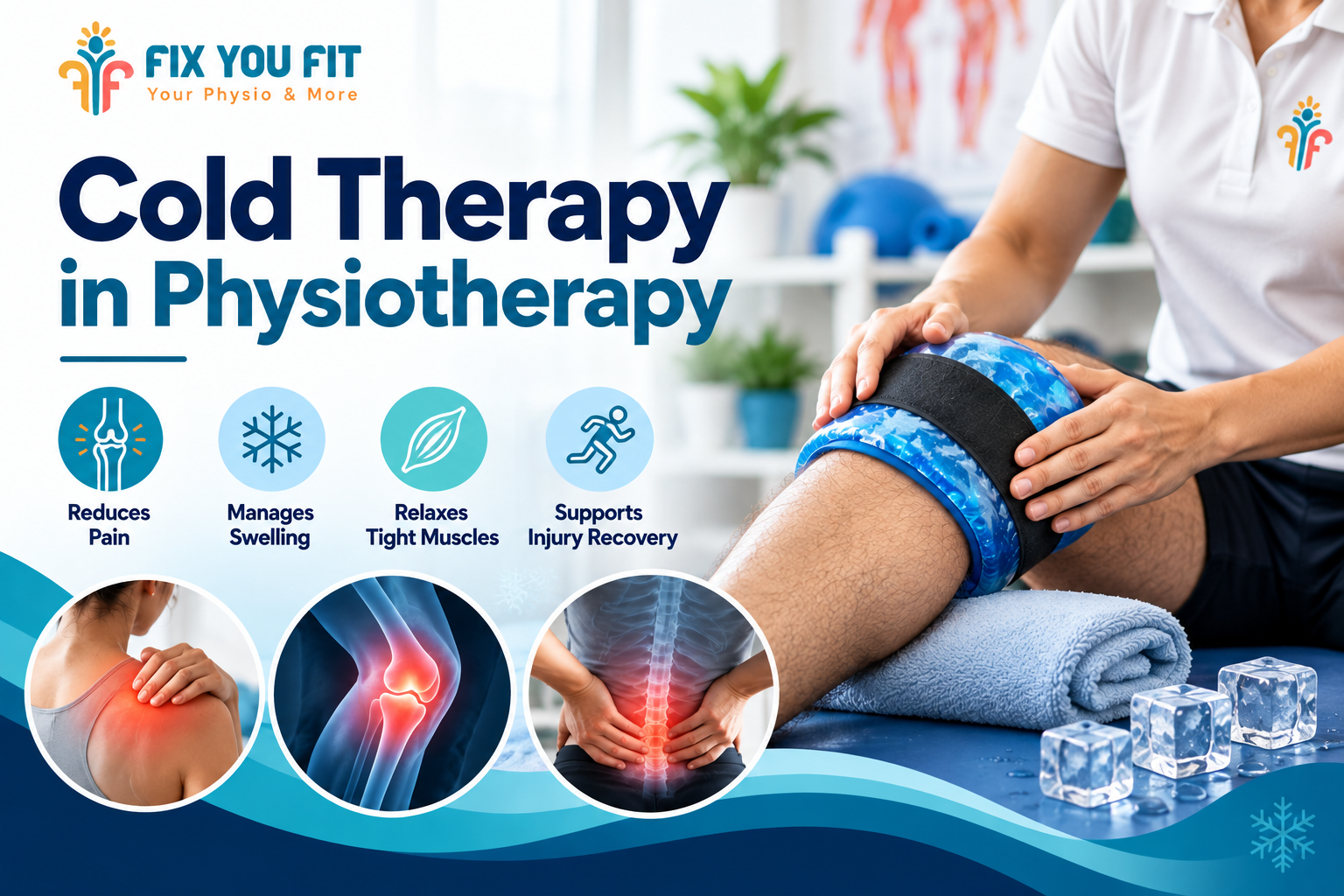
Most people reach for an ice pack the moment something hurts. In our clinic, we see the results every week: some ice for too long, some ice the wrong problem, and some skip it when it would genuinely help.
This guide explains how we use cryotherapy in Koramangala at FixYouFit, what cold can and can't do, and how to use it safely.
Cryotherapy in physiotherapy uses controlled cold to reduce pain, calm swelling and ease muscle spasm. Physiotherapists use it mainly after sprains, strains and flare-ups, for 10–20 minutes at a time, as one part of a rehab plan rather than a cure.
What Is Cryotherapy in Physiotherapy?
Cryotherapy simply means treating the body with cold. As Johns Hopkins Medicine explains, cold lowers skin temperature and slows nerve activity, which reduces pain and swelling.
Types of Cold Therapy We Use
Ice & Gel Packs
The everyday option for joints and muscles.
Ice Massage
Targets small, sore spots like tendons.
Cold Compression
Cold plus gentle pressure for swollen joints.
Cooling Sprays
Quick, short relief for muscle spasm.
Cryotherapy Benefits

The main cryotherapy benefits are short-term, but they matter because they let you move sooner. A short ice session before rehab often helps patients exercise more freely.
- Reduces painSlower nerve signals mean less pain.
- Manages swellingNarrowed blood vessels limit fluid build-up.
- Eases muscle spasmCold calms protective muscle guarding.
- Supports rehabLess pain makes exercise easier to start.
When Is Cryotherapy Used?
Cold Therapy for Sports Injuries
Koramangala has a busy running, football and gym crowd, so cold therapy for sports injuries is something we use daily for ankle sprains, muscle strains, bruises and tendon flare-ups.
A typical case: a weekend footballer rolls an ankle on Saturday. A few short, wrapped ice sessions settle the pain, and by Monday we're starting gentle movement and balance work.
Other Common Uses
- Knee arthritis flare-ups
- Swelling after knee or hip surgery
- Acute low back pain episodes
- Tendonitis and runner's knee
❄ Choose Cold
New injury, swelling, or a hot, irritated area.
☀ Choose Heat
Long-standing stiffness or tight muscles before activity.
Our Honest Take: Ice Is a Tool, Not a Cure
Newer sports-medicine guidance suggests heavy, repeated icing in the first days may not speed up tissue healing. That's why we use cold mainly for pain relief, then move you quickly towards movement, loading and exercise, which is where real recovery happens.
Is Cryotherapy Safe?
Yes, when used correctly. Most problems we see come from ice placed directly on skin or left on too long. If pain keeps rising after icing, stop and get it checked.
Safety Rules to Follow
Wrap It
Use a thin towel between ice and skin.
Time It
10–20 minutes, then let the skin warm up.
Check It
Stop if the area turns numb, white or blistered.
Space It Out
Let your skin rewarm fully before repeating.
Who Should Avoid It
Check with a physiotherapist first if you have diabetes or reduced skin sensation, Raynaud's, cold allergy, poor circulation or an open wound.
Cryotherapy in Koramangala at FixYouFit
Cold therapy is part of our advance physiotherapy care. We combine it with hands-on treatment and exercise, and we show you how to ice safely at home.
If you're searching for cryotherapy in Koramangala, start with an assessment at our physiotherapy clinic in Koramangala so we treat the cause, not just the pain.
"In our experience, patients recover fastest when ice calms the pain and exercise does the healing." — FixYouFit Physiotherapy Team
Frequently Asked Questions
Usually 10–20 minutes, a few times a day, always wrapped in a thin towel.
It helps with flare-ups and swelling. For long-term stiffness, heat and strengthening often work better.
Cold is better in the first few days for pain and swelling. Gentle heat can help later if the joint feels stiff.
Yes. Ice placed directly on skin or left too long can cause an ice burn. Always wrap it and check your skin.
At FixYouFit, as part of a physiotherapy plan built around your injury and goals. We'll first check whether cold therapy actually suits your problem.
Cool the Pain, Fix the Cause
Book cryotherapy in Koramangala as part of a complete physiotherapy plan.
- Sports injuries
- Swelling & pain
- Safe home guidance
General information only. Severe pain, a suspected fracture or numbness that doesn't settle needs prompt medical care.
Leave A Comment